

Selecting the right heavy vehicle lift isn’t just about lifting capacity — it’s about choosing a solution that works reliably in your workshop, every day.
Across Australia, workshops are dealing with a wide range of vehicles, site conditions, and operational demands. The lift you choose needs to support consistent servicing, safe access, and efficient workflow — not just meet a specification on paper.
Start With How Your Workshop Operates
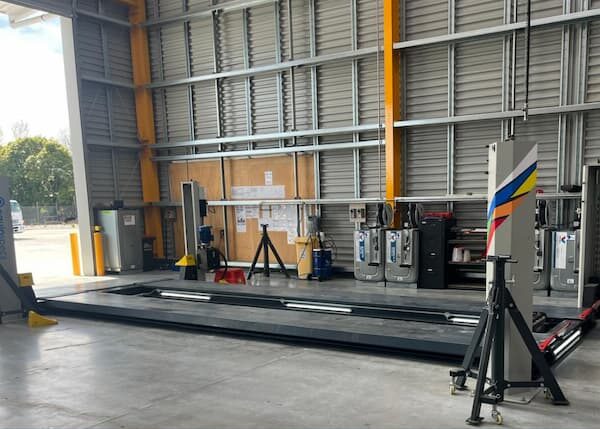
Before comparing lift types, it’s worth looking at the practical realities of your workshop:
- What vehicles are you servicing? (fleet trucks, buses, mixed vehicles)
- How often are vehicles moving through each bay?
- Is your layout fixed, or likely to evolve over time?
- Are there any site constraints (space, floor conditions, or access)?
For most Australian workshops, the goal is simple:
safe, repeatable lifting that supports day-to-day servicing without slowing the job down.
What a Practical Lift Solution Looks Like
In busy workshop environments, lifting equipment needs to deliver:
- Stable platform support for safe access underneath the vehicle
- Controlled, consistent lifting performance
- Ease of operation for technicians
- Minimal dependency on additional systems
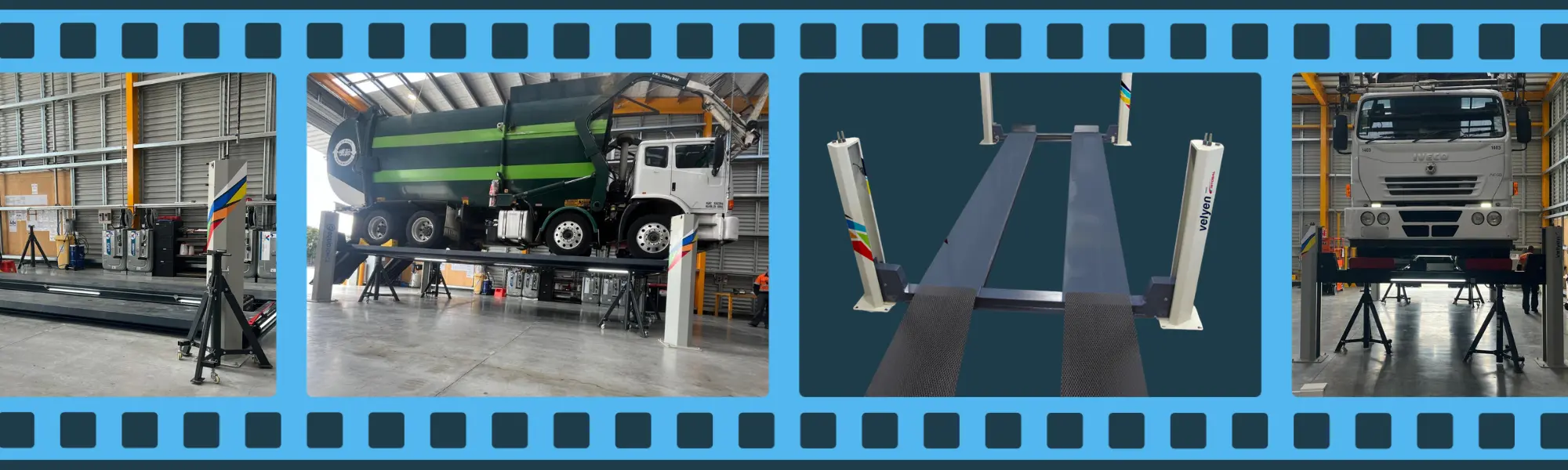
This is why platform-based lifting systems — particularly four-post lifts — are widely used across heavy vehicle workshops.
Four-Post Lifts: Built for Everyday Workshop Use
Four-post heavy vehicle lifts are designed to support routine servicing work.
Vehicles are driven onto a stable platform and lifted in a controlled, balanced way, giving technicians safe and consistent access for inspections and maintenance.
In practice, systems such as Velyen’s four-post hydraulic lifts reflect this design approach, offering configurations that suit a wide range of workshop requirements.
Key characteristics can include:
• Wide capacity range — typically from around 8 tonnes up to 30 tonnes
• Long platform configurations (up to 8000 mm) for larger vehicles
• Extra-wide platform options for increased stability
• Electro-hydraulic operation — no compressed air required in many systems
• Smooth, controlled lifting performance across repeated use

Taken together, these features provide a practical solution for workshops servicing anything from medium trucks through to larger fleet vehicles.
Why Four-Post Lifts Work Well in Australia
Australian workshops often prioritise equipment that is:
- Reliable under regular use
- Simple for technicians to operate
- Consistent across different vehicle types
- Straightforward to maintain
Four-post lifts align well with these requirements, particularly in workshops where:
- Vehicles are moving through bays continuously
- A mix of truck and fleet vehicles are serviced
- Stability and predictability are critical for safety
They are commonly used across fleet servicing, transport workshops, councils, and waste management operations, where dependable lifting is part of everyday workflow.
Considering Other Lift Types
While four-post lifts are a strong fit for many applications, other lift types may suit specific requirements.
Mobile Column Lifts
Offer flexibility for workshops that need to move lifting equipment between bays or handle varying vehicle configurations.
In-Ground Lifts
Typically used in purpose-built facilities with fixed layouts and high throughput.
Scissor or Platform Lifts
Used for specialised applications where full-length access or specific workflows are required.
The right choice depends on how your workshop operates — not just the lift itself.
Installation and Site Considerations
Site conditions in Australia often influence the final decision more than expected.
- Floor conditions and structure
- Available space and bay layout
- Existing workshop vs new build
Four-post lifts are often selected because they are relatively straightforward to install and integrate, without the complexity of major civil works required by some alternatives.
Safety and Control
Lifting heavy vehicles requires equipment that performs consistently and safely under load.
Look for:
- Mechanical locking systems
- Controlled lifting and lowering
- Overload protection
- Stable, evenly distributed platform support
These features are essential for safe operation in busy workshop environments.
Integration With Your Workshop Equipment
Lifting equipment should work as part of a complete workshop setup.
This includes:
- Brake testing equipment
- Inspection pits
- Ventilation systems
- General servicing areas
For example, workshops using portable or mobile brake testing equipment often pair it with above-ground lifting solutions to maintain flexibility in layout and workflow.
Long-Term Performance Matters
The true value of a lift comes from how it performs over time.
Consider:
- Build quality and durability
- Ease of daily use
- Availability of service and support
- How well it fits your workflow
A lift that integrates cleanly into your operation will deliver far more value than one that creates friction.
In Conclusion
Choosing the right heavy vehicle lift comes down to selecting equipment that supports your workshop in a practical, reliable way.
For many Australian workshops, four-post lifts provide a well-balanced solution — combining capacity, stability, and ease of use across a wide range of applications.
If you’re planning a new workshop or reviewing your current setup, selecting the right lifting solution is a key part of the process.
Explore our heavy vehicle lifting solutions or get in touch to discuss what will work best for your workshop.